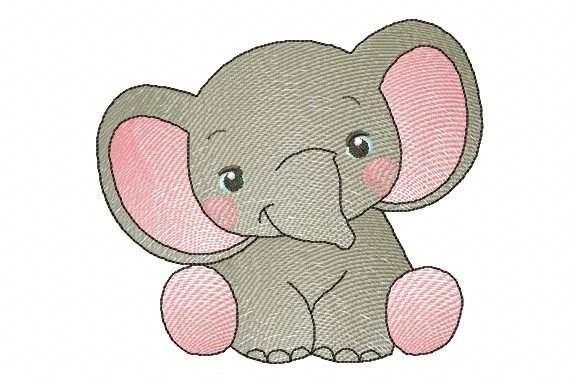
Safari Elephant
First Impressions: A Friendly and Playful Design
The Safari Elephant design immediately strikes a balance between whimsy and professionalism. Its friendly, playful nature makes it ideal for businesses targeting families or younger demographics. The design feels handcrafted yet polished, which is a great asset for small business merch and branded products. It carries a sense of warmth and approachability that can help build customer trust and brand recognition.
Business Use: Versatile and Adaptable
The Safari Elephant is a versatile machine embroidery design that can be applied to a wide range of commercial projects. From embroidered patches to custom apparel, this design has the potential to elevate various product lines. Here are some key areas where it could excel:
- Embroidered Patches: Perfect for adding a cute, memorable touch to aprons, caps, and tote bags.
- Chest Logo Accents: Ideal for staff uniforms, especially in cafes, bakeries, and boutique shops.
- Cap Embroidery: Adds a fun element to branded caps, making them stand out at events or as customer gifts.
- Tote Bag Design: Can serve as a subtle branding tool on tote bags, enhancing visual consistency across merchandise.
- Apron Embroidery: Great for food-related businesses looking to add personality and charm to their aprons.
- Product Packaging Accents: Offers a unique way to brand packaging without being too intrusive.
- Custom Apparel: Works well on children’s clothing, making it a hit with parents and kids alike.
- Etsy Branding: A strong candidate for handmade product listings, helping crafters stand out in a competitive market.
- Commercial Embroidery Projects: Suitable for both small-scale and larger production runs, depending on the file quality and stitch density.
Design Considerations for Real-World Applications
While the Safari Elephant is visually appealing, there are a few factors to consider before using it in real business scenarios:
- Small Patch Sizes: The design may need simplification or scaling down when used on tiny patches to maintain clarity and detail.
- Cap Fronts: Ensure the design doesn’t get lost on curved surfaces by testing it on actual fabric or using printable mockups.
- Tiny Lettering: If the design includes text, verify that it remains legible at smaller sizes.
- High Stitch Density: Be mindful of stitch density, especially on delicate fabrics, to avoid puckering or damage.
- Detailed Outlines: While intricate details enhance the design, they may not translate well to certain fabric textures or lighting conditions.
- Fabric Texture: Test the design on different fabric types to ensure it looks good on both light and dark materials.
- Dark Uniforms: Choose thread colors that contrast well with dark backgrounds to maintain visibility and impact.
- Frequent Washing: For items like aprons or work shirts, consider durability and how the design holds up over time.
Impact on Brand Identity and Customer Engagement
The Safari Elephant can significantly influence brand identity, especially for businesses that want to convey a friendly and approachable image. Its playful nature helps create a positive association with the brand, encouraging customer engagement and loyalty. When used consistently across various products, such as tote bags, caps, and aprons, the design reinforces brand recognition and visual consistency.
Moreover, the Safari Elephant adds value to the finished product by making it more memorable and emotionally appealing. This is particularly important for handmade products and small business merch, where personalization and uniqueness play a key role in buyer engagement.
Practical Designer Notes for Commercial Use
As an experienced embroidery designer, I recommend the following steps before using the Safari Elephant in a commercial setting:
- Test in Black and White: Ensure the design maintains its visual appeal without color.
- Check Small Patch Size Compatibility: Confirm it works well at the smallest usable size.
- Review Thread Color Contrast: Select thread colors that provide maximum visibility against the fabric.
- Inspect Spacing and Proportions: Make sure elements are balanced and not overcrowded.
- Confirm Hoop Size: Verify that the design fits within standard hoop dimensions for ease of use.
- Use Proper Stabilizer: Protect the fabric and ensure even stitching during the process.
- Create a Printable Mockup: Present the design to clients or stakeholders for approval before production.
- Compare with Other Design Assets: Ensure it aligns with the overall brand aesthetic and messaging.
- Confirm Commercial Licensing: Always check that the design is suitable for commercial use and has proper licensing.
Final Thoughts on Safari Elephant
The Safari Elephant is a promising design that offers a blend of charm and functionality for small business merch and branded products. Its adaptability makes it suitable for a wide range of applications, from embroidered patches to custom apparel. With careful planning and attention to detail, it can become a valuable asset in building a cohesive and engaging brand identity.